




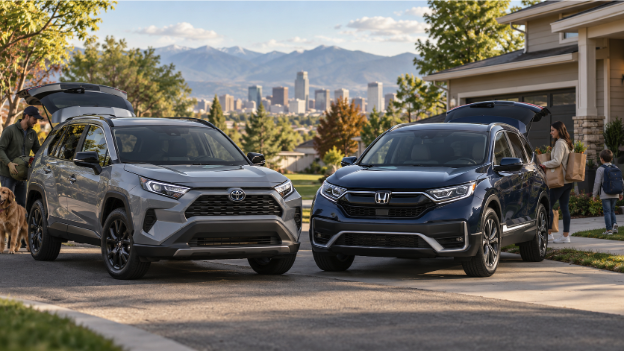
Choosing between the Toyota RAV4 and Honda CR-V comes down to how you drive every day. Both offer comfortable seating, available AWD, hybrid options, and practical cargo space. The RAV4 leans toward rugged utility, while the CR-V emphasizes passenger comfort and flexible interior space.
If you’re buying used, compare more than the badge: mileage, maintenance history, trim, drivetrain, and overall condition all matter. Before making a decision, check the vehicle’s VIN using the NHTSA recall lookup tool for any open safety recalls.
Toyota RAV4 vs Honda CR-V: Quick Comparison
Because specifications change between model years and trims, compare the exact vehicles rather than relying only on model-name averages.
Which SUV Is Better for Everyday Driving?
For daily driving, the Honda CR-V is a good fit for comfort and passenger space, while the Toyota RAV4 suits drivers who want more utility and flexibility.
The CR-V offers a smooth ride and roomy rear seats, making it practical for commuting, school runs, and family use.
The RAV4 has a more rugged feel and can suit drivers who deal with rough roads, bad weather, or weekend outdoor trips.
When comparing the Honda CR-V vs. Toyota RAV4, check:
-
Seat comfort
-
Visibility
-
Parking ease
-
Highway noise
-
Acceleration
-
Infotainment controls
The better choice depends on your routine: CR-V for comfort, RAV4 for added utility.
RAV4 vs. CR-V Hybrid: Which Makes More Sense?
For drivers who cover a lot of miles, the RAV4 vs. CR-V Hybrid comparison is worth a closer look. Both hybrid models can help reduce fuel use, especially in city and mixed driving.
Fuel economy varies by model year, trim, and drivetrain. The 2025 RAV4 Hybrid is rated at up to 39 mpg combined, while some recent CR-V Hybrid models are rated around 40 mpg combined. Use the official EPA FuelEconomy.gov comparison tool to check the exact model you are considering.
If buying used, check:
-
Hybrid battery condition
-
Warranty coverage
-
Maintenance records
-
Warning lights
-
Tire condition
The better RAV4 vs CR-V hybrid choice depends on fuel economy, price, condition, and vehicle history.
RAV4 vs CR-V Cargo Space and Family Practicality
Cargo space matters if you regularly carry groceries, sports gear, luggage, or other bulky items.
In the RAV4 vs CR-V cargo space comparison, recent CR-V models generally offer more maximum cargo room. Honda lists up to 76.5 cubic feet of space behind the first row, while the 2025 RAV4 offers up to 69.8 cubic feet.
Still, the total number is only part of the story. The shape of the cargo area, load-floor height, rear-seat folding setup, liftgate opening, and available small-item storage can all affect how practical the space feels.
If you often carry a stroller, pet crate, golf clubs, work gear, or luggage, check how easily those items fit before choosing.
RAV4 Vs CR-V Reliability: What Matters on a Used SUV?
When comparing RAV4 Vs CR-V reliability, the condition of the specific vehicle matters more than the badge alone. Both SUVs can be dependable, but maintenance history and previous use make a big difference.
When comparing Toyota RAV4 vs Honda CR-V reliability, focus on the condition and service history of each vehicle. A well-maintained higher-mileage SUV can sometimes be a better choice than a lower-mileage vehicle with poor maintenance records.
For additional context on long-term RAV4 ownership, Generous Auto's guide to Toyota RAV4 reliability explains several factors buyers should consider.
Used RAV4 vs CR-V: What Should You Check Before Buying?
When choosing a used RAV4 Vs CR-V, look beyond the model name. The condition, maintenance history, mileage, and features of each vehicle can make a big difference.
Start by reviewing service records and checking the tires, brakes, and overall condition. During the test drive, make sure the SUV accelerates smoothly, drives straight, and does not make unusual noises.
Before buying, also check:
-
VIN and recalls: Use the VIN to look for any open recalls.
-
Trim level: Confirm the safety, comfort, AWD, and technology features included.
-
Gas or hybrid: Compare fuel economy based on how much you drive.
-
AWD system: Check tire condition and make sure the drivetrain works smoothly.
-
Vehicle history: Review accidents, previous owners, service records, and title status.
-
Ownership costs: Consider fuel, insurance, maintenance, tires, taxes, and financing.
You can browse Generous Auto’s used vehicle inventory to compare available model years, mileage, features, and prices.
If you plan to trade in your current vehicle, checking its trade-in value can also help you plan your overall budget.
Which SUV Fits Your Daily Drive?
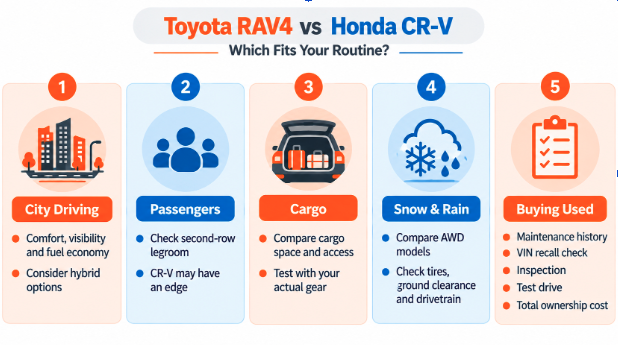
Which One Should You Choose?
The Honda CR-V vs. Toyota RAV4 decision is close because both SUVs cover the basics well.
The RAV4 may make more sense if your daily driving regularly mixes commuting with outdoor recreation, changing road conditions, or a preference for a more utility-focused SUV.
The CR-V may fit better if passenger comfort, rear-seat room, flexible cargo capacity, and relaxed daily driving are higher on your list.
For used buyers, condition can change the answer completely. A well-maintained CR-V can be the smarter purchase than a poorly maintained RAV4, and the reverse is equally true.
Set a realistic total budget first. Generous Auto's financing resources can help buyers review payment considerations while comparing different used vehicles.
Then, drive both options and choose based on how each one handles the trips you actually make.
Final Thoughts
The Toyota RAV4 Vs Honda CR-V comparison does not need a universal winner.
The RAV4 can suit drivers who want everyday practicality with a slightly more utility-focused character. The CR-V can suit buyers who prioritize passenger comfort, interior flexibility, and an easy daily-driving experience.
For a used SUV, the final decision should come down to condition, service history, price, mileage, features, fuel needs, and how the vehicle performs during your test drive. Comparing real examples side by side is the clearest way to find the SUV that fits your daily drive.
Frequently Asked Questions
Is the Toyota RAV4 or Honda CR-V better for daily driving?
Both work well for everyday driving. The RAV4 may appeal more to drivers who want a utility-focused feel and available AWD capability, while the CR-V often suits shoppers prioritizing passenger comfort, cabin space, and a relaxed commute.
Which is more reliable, the Toyota RAV4 or Honda CR-V?
There is no reliable answer based on the model name alone. In a RAV4 vs. CR-V reliability comparison, review the model year, maintenance history, mileage, prior repairs, and current mechanical condition before deciding.
Which has more cargo space, RAV4 or CR-V?
In recent generations, the CR-V generally offers more maximum cargo volume, although specifications vary by year and powertrain. For a useful RAV4 vs. CR-V cargo space comparison, check the exact model year and test whether your normal equipment actually fits.
Is the RAV4 Hybrid or CR-V Hybrid better for commuting?
Both can be efficient commuting choices. When comparing RAV4 vs. CR-V Hybrid models, look beyond the headline MPG and compare purchase price, annual mileage, drivetrain, maintenance history, battery coverage, and the EPA rating for the exact year and trim.
What should I look for when buying a used RAV4 vs. CR-V?
When comparing a used RAV4 vs. a CR-V, check maintenance records, accident history, recall status, tires, brakes, drivetrain operation, electronics, and overall condition. A thorough test drive and inspection can tell you more about a particular vehicle than its reputation alone.
Categories:
Social